The Yellowstone Supervolcano: A Geological Giant
The Yellowstone Supervolcano: A Geological Giant
Introduction
The Yellowstone Supervolcano is one of the most powerful and intriguing volcanic systems on Earth. Located in Yellowstone National Park, this supervolcano has a history of colossal eruptions that have shaped the landscape and affected global climates. To understand the geological background of the Yellowstone Volcano, it's essential to explore its geological background, which provides valuable insights into its formation and evolution. This blog post explores the characteristics, history, and scientific monitoring of the Yellowstone Supervolcano, providing insights into its significance and potential impact.
What is a Supervolcano?
Definition and Characteristics
A supervolcano is a volcanic center that has had an eruption of magnitude 8 on the Volcano Explosivity Index (VEI), meaning it has ejected more than 1,000 cubic kilometers (240 cubic miles) of material. These eruptions are incredibly rare but have the potential to cause widespread devastation and long-term climate effects.
The Yellowstone Caldera
The Yellowstone Supervolcano is characterized by a massive caldera, a large volcanic crater formed by the collapse of land following an eruption. The Yellowstone Caldera measures about 30 by 45 miles (48 by 72 km) and was formed by the last major eruption around 640,000 years ago.
Volcanic History
Major Eruptions
Yellowstone has experienced three major eruptions in the past 2.1 million years:
- Huckleberry Ridge Eruption (2.1 million years ago): The largest eruption, releasing approximately 2,450 cubic kilometers of material.
- Mesa Falls Eruption (1.3 million years ago): This eruption ejected about 280 cubic kilometers of volcanic material.
- Lava Creek Eruption (640,000 years ago): The most recent major eruption, which formed the current caldera and released around 1,000 cubic kilometers of material.
Geological Impact
These eruptions had significant impacts on the landscape, creating vast calderas and depositing thick layers of ash across North America. The Lava Creek Eruption, for example, produced ash that covered much of the western United States and affected global climate patterns.
Current Activity and Monitoring
Geothermal Features
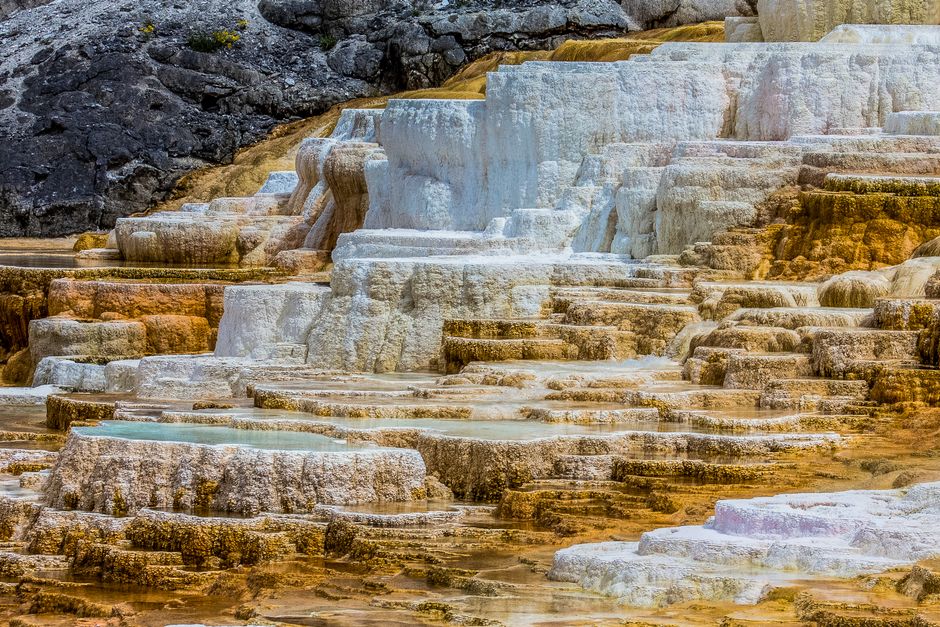
Yellowstone is renowned for its geothermal features, which are fueled by the heat from the supervolcano's magma chamber. The park is home to more than 10,000 geothermal features, including geysers, hot springs, fumaroles, and mud pots, making it a unique geothermal wonderland. Old Faithful, one of the world's most famous geysers, is a prime example of this ongoing geothermal activity, which is part of Yellowstone's dynamic geothermal landscape.
Seismic Activity
The Yellowstone region experiences frequent seismic activity, with thousands of small earthquakes recorded each year. These quakes are primarily caused by the movement of magma and hydrothermal fluids beneath the surface. While most of these earthquakes are too small to be felt, they provide valuable data for scientists monitoring the volcano.