Mastering Trading Psychology to Protect Your Capital
Who Should Read This
If you're a serious trader looking to improve your performance, you're in the right place. This article is for you if you've ever found yourself making impulsive decisions based on emotions, or if you're struggling to stick to your trading plan. You'll learn how to recognize and overcome common psychological pitfalls that can derail even the best-laid plans.
Perhaps you've heard warnings from veteran investors like Steve Sosnick, who predicts a market dip in 2026. If so, you're likely wondering how to protect your capital and stay ahead of the curve.
The Core Concept
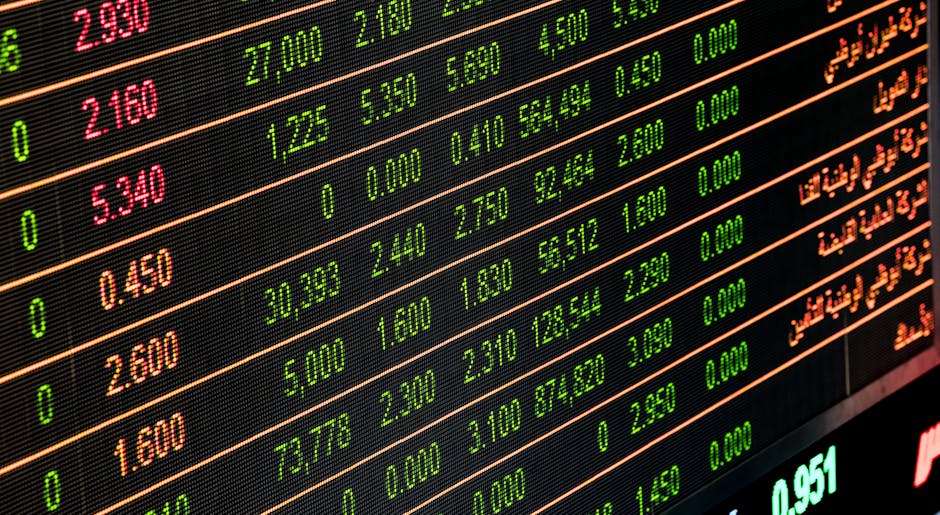
Live Market Data
At its core, trading psychology is about understanding how your mind influences your trading decisions. It's about recognizing the emotional and cognitive biases that can lead you astray, and developing strategies to overcome them. For example, consider the concept of loss aversion, where the pain of losing $100 is greater than the pleasure of gaining $100. This bias can cause you to hold onto losing positions for too long, hoping to recoup your losses.
A key concept in trading psychology is the idea of position sizing. By limiting your exposure to any one trade, you can reduce your risk and minimize potential losses. For instance, if you have a $25,000 account, you might allocate 2% to a trade, limiting your maximum loss to $500.
What Most People Get Wrong
One of the most common mistakes traders make is letting fear and greed dictate their decisions. When the market is trending upward, it's easy to get caught up in the excitement and overextend yourself. On the other hand, when the market is falling, fear can cause you to sell too quickly, locking in losses. Another mistake is revenge trading, where you try to recoup losses by making impulsive, high-risk trades.
Moreover, many traders fail to recognize the impact of confirmation bias on their decision-making. This bias causes you to seek out information that supports your existing views, while ignoring contradictory evidence. For example, if you're long on AAPL, you might focus on positive news and ignore warning signs, such as a declining 50-day moving average.
How It Actually Works
So, how can you profit from trading psychology right now? By understanding the mechanics of the market and the psychology of other traders. For instance, consider the SPY, which has a 50-day moving average at $585. If the market is trending upward, you might set an alert at $580, preparing to buy on a pullback. Meanwhile, if the QQQ is experiencing a sharp decline, you might look to short it, using a stop-loss at $350 to limit your exposure.
According to Steve Sosnick, chief strategist at Interactive Brokers, small investors are often more resilient than institutional traders. By understanding this dynamic, you can develop strategies that take advantage of the market's emotional swings. For example, you might use a contrarian approach, buying when others are selling, and selling when others are buying.
Real-World Application
Let's consider a concrete case study. Suppose you're trading AAPL, which has a support level at $150. If the stock breaks below this level, you might sell, using a stop-loss at $145 to limit your loss. On the other hand, if the stock is trending upward, you might set an alert at $160, preparing to buy on a breakout. By understanding the psychology of other traders, you can anticipate these moves and position yourself accordingly.
For example, if you have a $10,000 account, you might allocate 5% to AAPL, using a position size of $500. If the stock moves against you, your maximum loss would be limited to $500, or 5% of your account. By managing your risk in this way, you can protect your capital and stay in the game for the long haul.
Market Trends and Valuation
Veteran investors are warning of a potential stock market downturn in 2026, citing overvaluation and bear-market trends in bond markets. According to a recent article, a silent risk is creeping into the bull market run. By understanding these trends and adjusting your strategy accordingly, you can stay ahead of the curve and protect your capital.
The Strategy
So, what's the best way to apply trading psychology in your own trading? One approach is to use a disciplined, rules-based strategy, such as a moving average crossover system. For example, you might buy the SPY when its 50-day moving average crosses above its 200-day moving average, and sell when it crosses below. By using a systematic approach, you can reduce the impact of emotions on your trading decisions.
Another strategy is to use options, such as credit spreads, to limit your risk and generate income. For instance, you might sell a call option on QQQ, using a strike price of $350, and buy a call option with a strike price of $360. By doing so, you can generate a credit of $100, while limiting your potential loss to $100.
Your Next Step
Now that you've learned about the importance of trading psychology, it's time to take action. Set an alert at $580 for the SPY, and prepare to buy on a pullback. Meanwhile, consider allocating 5% of your account to AAPL, using a position size of $500. By taking these concrete steps, you can start to apply the principles of trading psychology in your own trading, and protect your capital in the process.
Remember, trading psychology is a journey, not a destination. By continually learning and adapting, you can develop the skills and strategies you need to succeed in the markets. So, don't wait – start applying the principles of trading psychology today, and watch your trading performance improve over time.
Last updated: February 2026
By the Investing Strategies Editorial Team
This content is for informational purposes only. Not financial advice—always do your own analysis before making investment decisions.