Navigating AI-Driven Volatility in the Stock Market
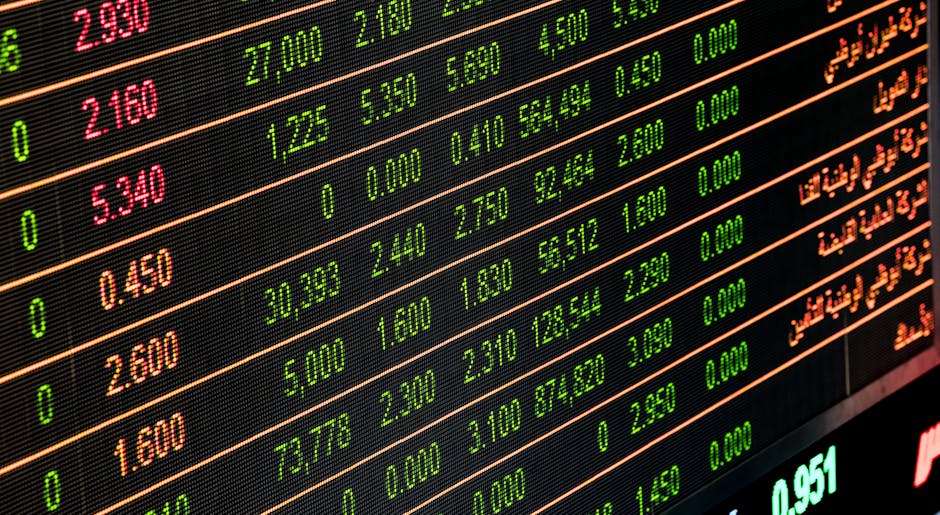
What's Happening in the Stock Market
Recent stock market news has been dominated by fears of an AI apocalypse, with investors worried that artificial intelligence could disrupt white-collar jobs and cause stock market volatility. But what does this mean for your portfolio? If you're invested in stocks like SPY or QQQ, you're likely seeing some fluctuations. For example, SPY's price has been hovering around $585, with a 50-day moving average providing key support.
Meanwhile, stocks like AAPL have been experiencing increased volatility, with some investors selling off their shares due to concerns about AI's impact on the tech industry. However, it's worth noting that these fears are more sentiment-driven than based on real threats.
Who Should Read This
Live Market Data
This article is for investors who want to navigate the complexities of the stock market and make informed decisions about their investments. If you're looking to protect your portfolio from AI-driven volatility, you'll want to keep reading.
The Core Concept
The core concept here is that AI-driven volatility is a real concern, but it's not a reason to panic. By understanding how AI is impacting the stock market, you can make smart investment decisions and protect your portfolio. For instance, if you're invested in the tech sector, you may want to consider allocating 20% of your portfolio to more stable stocks like Johnson & Johnson (JNJ) or Procter & Gamble (PG).
Understanding AI's Impact
AI has the potential to disrupt many industries, but it's not a guarantee that it will happen overnight. In fact, many experts believe that AI will augment human capabilities, rather than replace them. According to a report by McKinsey, up to 30% of jobs could be automated by 2030, but this doesn't necessarily mean that 30% of workers will lose their jobs.
What Most People Get Wrong
Many investors make the mistake of selling off their shares when they hear about AI-driven volatility. However, this can be a costly mistake. By selling low and buying high, you can end up losing money in the long run. For example, if you sold your SPY shares at $550 and then bought them back at $600, you would have missed out on a 10% gain.
Another mistake is to assume that AI will only impact certain industries. The truth is that AI has the potential to disrupt many different sectors, from healthcare to finance. According to a report by Accenture, the healthcare industry could see up to 40% of its jobs automated by 2030.
How It Actually Works
When AI-driven volatility hits the stock market, it can be tempting to panic and sell off your shares. However, this is often a mistake. Instead, you should take a step back and look at the bigger picture. Consider the following numbers: SPY's 200-day moving average is around $560, while QQQ's is around $280. If these stocks fall below these levels, it may be a sign of a larger trend.
Meanwhile, you should also consider the price-to-earnings ratio (P/E) of your stocks. For example, if AAPL's P/E ratio is above 25, it may be overvalued and due for a correction. On the other hand, if its P/E ratio is below 20, it may be undervalued and a good buying opportunity.
Real-World Application
Let's consider a real-world example. Suppose you have a $25,000 portfolio invested in a mix of SPY, QQQ, and AAPL. If you're concerned about AI-driven volatility, you may want to consider allocating 30% of your portfolio to more stable stocks like JNJ or PG. This would reduce your exposure to the tech sector and provide a more balanced portfolio.
For instance, if you allocate $7,500 to JNJ and $7,500 to PG, you would have a more diversified portfolio with a lower risk profile. You could also consider setting an alert at $550 for SPY and $270 for QQQ, so you can buy more shares if they fall below these levels.
The Strategy
So, what's the best strategy for navigating AI-driven volatility? One approach is to use a combination of technical analysis and fundamental analysis. By looking at charts and trends, you can identify potential buying and selling opportunities. For example, if SPY's relative strength index (RSI) falls below 30, it may be a sign of overselling and a good buying opportunity.
Entry and Exit Criteria
Here are some specific entry and exit criteria you can use: buy SPY when its RSI falls below 30 and sell when it rises above 70. You can also consider buying QQQ when its 50-day moving average crosses above its 200-day moving average, and selling when it crosses below. Meanwhile, you can buy AAPL when its P/E ratio falls below 20 and sell when it rises above 25.
Your Next Step
Now that you've read this article, your next step should be to review your portfolio and consider making some adjustments. If you're invested in stocks like SPY or QQQ, you may want to consider setting an alert at $550 for SPY and $270 for QQQ, so you can buy more shares if they fall below these levels. You should also consider allocating 20% of your portfolio to more stable stocks like JNJ or PG, to reduce your exposure to the tech sector and provide a more balanced portfolio.
By taking these steps, you can protect your investments from AI-driven volatility and make informed decisions about your portfolio. Remember to stay calm and don't panic - with the right strategy, you can navigate the complexities of the stock market and come out on top.
Last updated: March 2026
By the Investing Strategies Editorial Team
This content is for informational purposes only. Not financial advice—always do your own analysis before making investment decisions.