How to Read Market Analysis Like a Pro
Introduction to Market Analysis
Recent market analysis news, such as Berkshire's PacifiCorp utility winning a court ruling that could reduce its liability for Oregon wildfire damages, may leave you wondering what it means for your portfolio. The court decision, made by the Oregon Court of Appeals, could save the utility billions. As a trader, you need to understand how to read market analysis to make informed decisions.
For instance, consider the impact of the court ruling on Berkshire's stock price. If the utility's liability is reduced, it could lead to a increase in the stock price, potentially affecting your holdings.
Who Should Read This
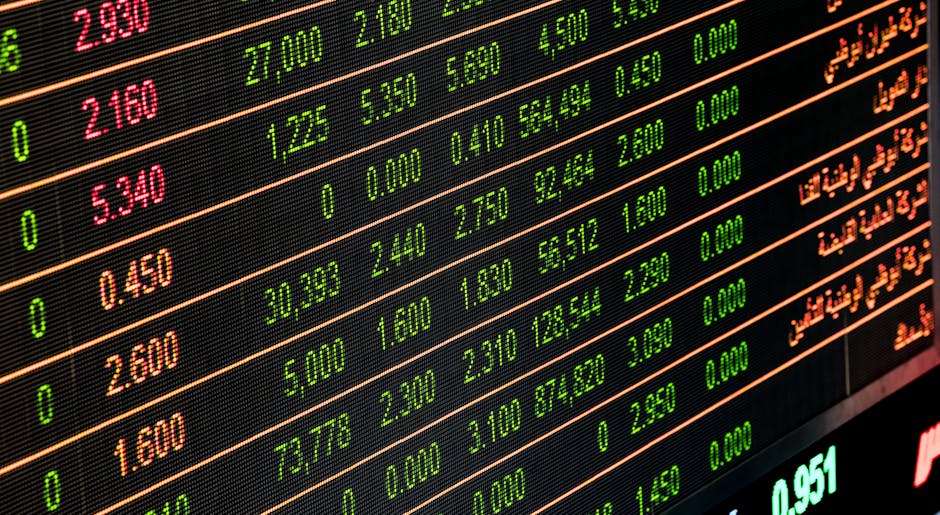
Live Market Data
This article is for traders and investors who want to improve their market analysis skills. Whether you're a seasoned pro or just starting out, you'll benefit from learning how to read market trends and make informed investment decisions.
The Core Concept
The core concept of market analysis is to understand the underlying trends and patterns that drive market movements. This involves analyzing technical indicators, such as moving averages and relative strength index (RSI), as well as chart patterns, like head and shoulders and trend lines. For example, the SPY's 50-day moving average at $585 provides key support, while the QQQ's RSI above 70 indicates overbought conditions.
Technical Indicators
Technical indicators, such as the moving average convergence divergence (MACD), can help you identify trends and predict future price movements. The MACD is calculated by subtracting the 26-day exponential moving average (EMA) from the 12-day EMA. A bullish crossover occurs when the MACD crosses above the signal line, indicating a potential buy signal.
What Most People Get Wrong
Most traders make the mistake of relying too heavily on news headlines and sentiment analysis. While these factors can be important, they don't provide a complete picture of the market. You need to consider multiple factors, including technical indicators, chart patterns, and volume analysis. For instance, a 2% position size limits your max loss to $500 on a $25,000 account, but you also need to consider the potential upside and adjust your position size accordingly.
Additionally, many traders fail to consider the impact of market volatility on their investments. The CBOE Volatility Index (VIX) can help you gauge market volatility and make informed decisions. A high VIX reading, above 20, indicates increased market volatility, while a low reading, below 15, indicates decreased volatility.
How It Actually Works
Market analysis involves a combination of art and science. You need to analyze historical data, identify patterns, and make predictions about future price movements. For example, if you're trading AAPL, you might look at the stock's historical price movements, identify areas of support and resistance, and adjust your trading strategy accordingly. A potential trading strategy could involve buying AAPL when the stock price breaks above the 50-day moving average, with a stop-loss at 5% below the entry price.
Chart Patterns
Chart patterns, such as the head and shoulders pattern, can help you identify potential reversals in the market. The head and shoulders pattern is characterized by a peak (the head) followed by a lower peak (the shoulders). A breakdown below the neckline of the pattern can indicate a potential sell signal.
Real-World Application
A concrete example of market analysis in action is the recent court ruling in favor of Berkshire's PacifiCorp utility. The ruling could save the utility billions, potentially leading to an increase in the stock price. As a trader, you could have anticipated this move by analyzing the company's financials, industry trends, and technical indicators. For instance, you could have looked at the stock's price-to-earnings (P/E) ratio, which is currently at 15, compared to the industry average of 20. This could indicate that the stock is undervalued and potentially due for a price increase.
Meanwhile, the QQQ's price-to-book (P/B) ratio is at 5.5, compared to the SPY's P/B ratio of 3.5. This could indicate that the QQQ is overvalued, potentially leading to a price correction.
The Strategy
A potential trading strategy could involve buying the SPY when the 50-day moving average crosses above the 200-day moving average, with a stop-loss at 5% below the entry price. You could also consider selling the QQQ when the RSI crosses above 70, indicating overbought conditions. Additionally, you could allocate 20% of your portfolio to AAPL, with a target price of $150.
Position Sizing
Position sizing is critical to managing risk and maximizing returns. A 2% position size limits your max loss to $500 on a $25,000 account, but you also need to consider the potential upside and adjust your position size accordingly. For example, if you're trading the SPY, you could allocate 10% of your portfolio to the ETF, with a stop-loss at 5% below the entry price.
Your Next Step
Set an alert at $585 for the SPY, and consider buying the ETF if the price breaks above the 50-day moving average. Meanwhile, keep an eye on the QQQ's RSI, and be prepared to sell if the indicator crosses above 70. Additionally, allocate 10% of your portfolio to AAPL, with a target price of $150. By following these steps, you can start to read market analysis like a pro and make informed investment decisions.
Beyond that, consider adjusting your portfolio to include a mix of low-risk and high-risk investments. For example, you could allocate 40% of your portfolio to the SPY, 30% to the QQQ, and 30% to AAPL. This could help you manage risk and maximize returns over the long term.
---
Last updated: April 2026
By the Investing Strategies Editorial Team
This content is for informational purposes only. Not financial advice—always do your own analysis before making investment decisions.